





14 Minutes reading time
Online Marketing means using digital channels to promote products and services. We at LikeMeASAP SEO Agency explain to you what Online Marketing is and how it works.
It is crucial because it allows companies to target their audiences in a targeted and cost-effective manner. In this article, you will learn what online marketing is, why it is important and which strategies are successful.
Key facts at a glance
- Online marketing refers to all internet-based activities aimed at increasing brand awareness and promoting sales, with a central role being played by the creation of high-quality content.
- There are various online marketing channels such as search engine marketing, social media marketing and email marketing that can be used to target specific Target groups to achieve effectively.
- To be successful in online marketing, companies must set measurable goals, analyze their target audience and make data-driven decisions to continuously optimize their strategies.
What is online marketing?
Online marketing includes all activities in Internet, which aim to increase brand awareness, promote sales and acquire new customers. Companies of all sizes benefit from the wide reach, low costs and flexibility that online marketing offers. The main goal is to draw attention to the brand and its websites.
Compared to traditional marketing, online marketing is increasingly preferred because it delivers measurable results and plays a central role in modern business life. It provides a solid basis for developing targeted campaigns and effectively reaching the desired target group.
Online Marketing Definition
Online marketing refers to the use of digital channels to increase sales and customer loyalty. It includes campaigns to generate sales and leads and uses channels such as websites, blogs and social networks. One of the greatest strengths of online marketing is the ability to directly address and reach the target audience on the Internet, which is part of an effective online marketing mix.
An important aspect of online marketing is the creation of high-quality content that informs and attracts customers. A well-designed website with optimal content and frequent linking can attract visitors without having to pay for ads.
This makes online marketing an efficient and cost-effective way to increase brand presence.
Difference between Online Marketing and Digital Marketing
Online marketing is a specific form of marketing that focuses on using the Internet to promote products or services. It is a subcategory of digital marketing, which includes a variety of digital advertising forms, including but not limited to Internet marketing.
The main difference is that digital marketing also includes other channels such as mobile marketing and Social Media outside the Internet. While online marketing focuses on Internet-based measures, digital marketing offers a wider range of options for reaching and retaining customers.
Important online marketing channels
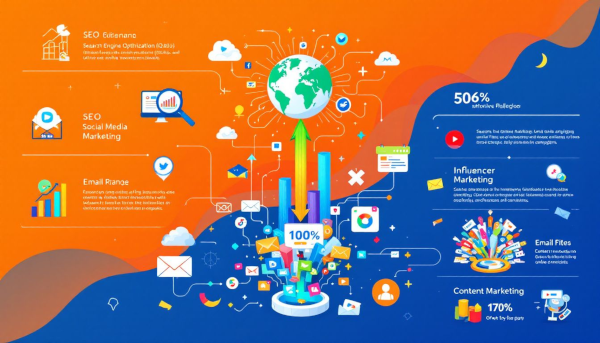
There are several central channels in online marketing that companies use to reach their target groups. The most important ones include:
- SEO
- paid advertising
- Content Marketing
- social media
Each of these marketing channels offers different opportunities to address customers and present the brand.
The various tools of online marketing include:
- the company website
- Search engine marketing
- Social Media Marketing
- video content marketing
- Newsletter marketing
All types of online advertising with videos, animations or graphics fall under display advertising. These channels are crucial for a successful online marketing strategy and marketing discipline.
Search engine marketing (SEM)
Search engine marketing (SEM) includes strategies for marketing through search engines such as Google and consists of two main areas: search engine advertising (SEA) and search engine optimization (SEO). SEO aims to improve discoverability and high ranking in search engines, which ultimately leads to more website traffic.
SEA works through paid advertisements that appear at the top of search engine results, making products or websites visible. Search engine marketing is relevant for every company that has a website, as it helps to increase visibility and reach potential customers.
Social Media Marketing
Social networks offer considerable advertising potential through large reach and various target group segmentation options. The most important social networks for marketing are:
- TikTok
TikTok is particularly cited as a leading platform for product discovery.
Social media marketing offers the greatest ROI for marketing efforts. Various campaign formats, including posts in groups, company pages and ads, increase reach and interaction rates. Costs are usually based on the pay-per-click or PPC system. Videos and live streaming are also central components of successful social media strategies.
Email Marketing
E-mail marketing is one of the most popular tools in online marketing, on a par with search engine marketing and behind social media marketing. The newsletter is the most common type of e-mail marketing. Many companies use it to inform their customers. Companies like Meier offer their newsletter subscribers:
- Tips
- Special offers
- Gift Vouchers
- more extras
When sending newsletters, it is important to collect legally correct customer data, and a double opt-in is recommended. Email marketing is versatile and offers high click rates and returns through newsletters and automated campaigns.
Content Marketing
Content marketing is the creation, publication and distribution of content to encourage customer engagement by the marketing manager. The goal is to create relevant and valuable content rather than directly sending promotional messages. Valuable content can attract potential customers without flooding them with advertising.
Patience is crucial in content marketing, as success takes time and a consistent strategy leads to results. Articles can also be published on specialist portals in order to use content marketing beyond your own website.
Generative AI and explainer videos are effective formats for making complex products and services understandable.
online marketing tools

The most important tools of online marketing include search engine marketing, social media marketing, email marketing and Affiliate Marketing. Various methods are used to market and distribute products or services. Performance marketing is used to trigger a measurable response.
Online marketing tools offer advantages such as controlling and measuring measures and generating synergy effects. These tools help beginners achieve quick success and help advanced users organize collected customer data, which is an important online marketing discipline.
Content creation involves creating ads that will run across different channels.
Display advertising
Visual advertising, including videos and animations, is called display advertising.
An important prerequisite for successful banner advertising is a well-thought-out landing page.
Affiliate Marketing
Affiliate marketing is a model in which partners promote services in exchange for a commission and help increase sales. Affiliate programs allow companies to promote their products through third-party sellers, thereby achieving a wide reach.
Affiliate marketing allows companies to reduce costs because they only pay for sales actually generated.
Influencer Marketing
Influencer marketing is advertising with well-known personalities who have influence in the industry. 88 percent of people tend to trust word of mouth, which shows that influencer marketing is highly accepted by consumers. Influencer marketing uses the reach and credibility of influential personalities to promote products.
Working with an influencer involves the influencer receiving the product and receiving a pre-agreed fee for it. Choosing the right influencers can be difficult because authenticity is key.
development of an online marketing strategy
The first step to an online marketing strategy is to set measurable business goals to derive specific marketing objectives. E-commerce is increasingly seen as a central focus for marketing strategies. In 2023, companies have increasingly invested in personalized marketing strategies to strengthen customer loyalty.
Increasingly, companies are using sustainability in their marketing strategies to appeal to environmentally conscious customers. These strategies help increase brand awareness and promote customer loyalty.
Ziele defines
Setting concrete goals is crucial to ensure that all marketing activities work toward a common vision.
SMART stands for:
- specific
- measurable
- reachable
- relevant
- time-bound
This forms the basis for the objective.
Examples of measurable marketing goals include increasing website visitors by 20% within 6 months or generating 100 new leads per month. Setting multiple milestones for the defined goals helps to review progress and make adjustments.
Target group analysis
Analyzing the existing data is an effective way to initialize a target audience profile to design precise marketing strategies. AI-powered tools help in market research by analyzing large amounts of data and predicting trends.
Identifying and analyzing the target audience is crucial to developing effective and customized marketing measures. Through this targeted analysis of the target audience, companies can develop customized marketing strategies that are better tailored to the needs of their customers.
Budget planning
Efficient budget planning requires making informed decisions about marketing strategies to make the best use of resources. Companies must carefully consider which actions will have the greatest impact on their marketing goals. This requires a clear definition of priorities and a realistic assessment of the available resources.
Customer Lifetime Value (CLV) helps companies determine the long-term value of a customer and evaluate the profitability of marketing strategies. Solid budget planning takes these values into account and ensures that investments in marketing activities bring sustainable success.
Success Factors in Online Marketing
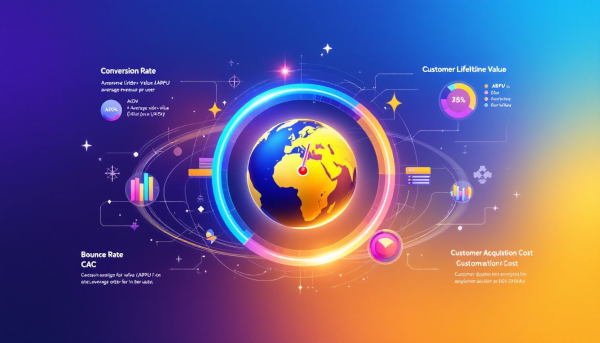
To be successful in online marketing, companies must consider several key factors. This includes regularly analyzing the data collected to check KPIs and adjust strategies. The visibility of a brand is crucial for the conversion rate and overall success in online marketing.
The precise definition and analysis of the target group helps to implement marketing measures in a targeted and effective manner. By focusing on these success factors, companies can achieve their marketing goals more efficiently and strengthen their online presence.
Conversion Rate
The Conversion Rate is the percentage of website visitors who perform a desired action, such as a purchase or newsletter subscription. A conversion represents a desired action, such as a purchase or registration. The conversion rate is calculated by dividing the number of conversions by the number of visitors.
A low bounce rate is often related to the user experience and the relevance of the content. A/B testing can be used in online marketing to evaluate different approaches and find out which measures increase the conversion rate.
click-through rate (CTR)
The click-through rate (CTR) is an important indicator of the success of online advertising, as it shows how often ads are clicked in relation to impressions. A high CTR is a sign that the ads are appealing to the target audience and generating interest.
To improve CTR, companies should create engaging and relevant ads that directly address the needs and interests of the target audience. Continuous optimization and monitoring of ad performance is critical to maximize success in content marketing.
Customer Lifetime Value (CLV)
The customer lifetime value (CLV) is a key factor in calculating the long-term value of a customer for a company. The CLV calculation is based on the factors average purchase value, purchase frequency and customer lifetime. A positive CLV is crucial for the profitability of a company and helps to optimize marketing strategies in a targeted manner.
Long-term strategies based on CLV promote customer loyalty and thus increase sales sustainably. Companies should regularly monitor CLV and develop strategies to maximize the value of each customer.
Challenges in Online Marketing
One of the biggest challenges in online marketing is the changing digital landscape, which requires constant adjustments. Building a target audience can take time and requires patience and adaptability of marketing strategies. Efficiency improvements are possible by automating repetitive tasks, which is supported by the use of AI in marketing.
When implementing online marketing measures, realistic target estimates should be taken into account to avoid failure. Disruptive forms of display advertising, such as pop-ups and banner ads, should be avoided in order not to impair the user experience.
Data protection and legal aspects
The GDPR represents one of the most significant legal challenges in online marketing. Companies must ensure that they handle customer data in accordance with data protection regulations to avoid legal consequences. The use of third-party cookies is increasingly restricted, which is changing the methods of digital marketing.
To ensure data protection, companies should implement transparent policies on data collection and processing. This strengthens customer trust and promotes long-term business relationships.
Technological developments
Technological changes have a profound impact on online marketing strategies and campaigns. The rapid evolution of digital technologies forces companies to constantly adapt their online marketing approaches. Artificial intelligence (AI) is increasingly being used to analyze data, automate processes and develop personalized marketing strategies.
Companies need to strategically select new tools and platforms and integrate them into their existing marketing methods to remain competitive. Choosing suitable platforms requires careful analysis of the target audience and their preferences as well as the market.
Advanced analytics tools enable more precise targeting and optimization of marketing campaigns.
Current Trends in Online Marketing
In 2022, a total of 24,6 billion euros were spent on online and digital marketing. Over the past four years, there has been a 50 percent growth in online and digital marketing spending. These trends show how important it is for companies to stay up to date with developments in online marketing.
Technological advances and changing Consumer preferences are driving the trends in online marketing. Companies should follow these trends closely and adapt their online marketing strategies accordingly in order to remain competitive.
Artificial Intelligence (AI)
Artificial Intelligence is increasingly being used in online marketing to develop strategies and create content. The use of AI has increased by 53,2 percent in the last five years, indicating an increasing importance of data analysis. AI can be used to create personalized marketing measures that better meet the needs of consumers.
AI supports the automation of marketing processes, which increases efficiency and effectiveness. Companies that integrate AI into their marketing strategies can gain valuable insights and optimize their campaigns.
Video Marketing
Video content increases engagement and the time users spend on websites. Targeted videos can significantly increase the conversion rate. Platforms like YouTube offer a wide reach and are ideal for video marketing.
Social media networks make it possible to present videos to a wide audience and let them go viral. Using storytelling in videos improves brand awareness and the emotional connection with the target group. A well-thought-out video marketing strategy should set clear goals and analyze the target group precisely.
Summary: Key takeaways about intuitive eating
Online marketing offers a variety of opportunities to increase brand awareness, promote sales and acquire new customers. The most important channels and instruments such as search engine marketing, social media marketing, email marketing and content marketing play a central role. A successful online marketing strategy requires clear objectives, precise target group analysis and efficient budget planning.
Taking into account success factors such as conversion rate, click-through rate and customer lifetime value as well as addressing the challenges of online marketing are crucial for long-term success. Current trends such as the use of artificial intelligence and video marketing should be integrated into strategies in order to remain competitive. With a sound understanding and a well-thought-out strategy, companies can exploit the full potential of online marketing and achieve sustainable success.
Frequently Asked Questions
What is online marketing?
Online marketing refers to all activities on the Internet aimed at increasing brand awareness, promoting sales and acquiring new customers. It is an essential strategy for business success in the digital age.
What is the difference between online marketing and digital marketing?
The difference is that online marketing uses the internet exclusively as a platform, whereas digital marketing covers a wider range of channels, including mobile and social media. Therefore, digital marketing is more comprehensive than online marketing.
Which channels are particularly important in online marketing?
In online marketing, email, SEO, paid advertising, content marketing and social media are particularly important. These channels play a crucial role in increasing visibility and reach.
Why is the conversion rate important?
Conversion rate is very important because it measures the percentage of website visitors who perform a desired action, which directly reflects the success of marketing efforts. A high conversion rate indicates effective strategies and content that encourage user engagement.
What role does artificial intelligence play in online marketing?
Artificial intelligence plays a crucial role in online marketing by optimizing strategy development, content creation and personalization of marketing efforts. This leads to a significant increase in the efficiency and effectiveness of marketing activities.