



13 Minutes reading time
Web designers: Overview & quick answers
Since the mid-1990s, the profession of web designer in Germany has evolved from a niche activity to a sought-after profession. With the increasing digitalization of companies, the e-commerce boom, and the mobile revolution, web designers have become increasingly in demand. Webdesigner Today, they are indispensable for almost every industry. They combine creativity with technical know-how and create digital experiences that delight customers and achieve business goals.
What exactly does a web designer do?
- Concept and design of websites, landing pages and web applications
- Development of user interface designs and navigation concepts
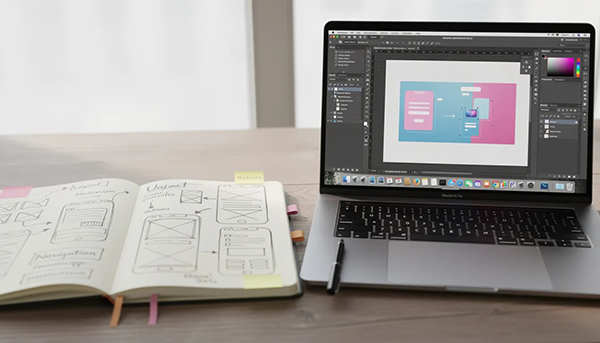
- Creation of wireframes, mockups and interactive prototypes
- Collaboration with developers, marketing and Content-Teams
- Optimization of User Experience UX and Usability
Entry points:
- Apprenticeship as a Media Designer for Digital and Print (3 years)
- Studies in communication design, interface design or media informatics
- Career change via bootcamps and further training
Salary in Germany in 2025:
- Starting salary: approx. €32.000–38.000 gross/year
- With professional experience: approx. €40.000–48.000 gross/year
- Senior level: approx. €50.000–€65.000 gross/year
Key facts at a glance:
| Aspect | Details |
|---|---|
| Location | Digital agencies, in-house teams, freelance, remote |
| Entry duration | up to 3-4 years (training/studies) |
| Core tools | Figma, Adobe XD, Photoshop, HTML/CSS |
| Important skills | UX design, responsive design, communication |
| Working hours | Full-time, part-time or project-based options available |
How does a web designer differ from other roles?
The web designer focuses on the visual layout, user-friendliness, and the Corporate Identity a website. In contrast, front-end developers primarily focus on the technical implementation using programming languages such as... JavaScriptGraphic designers, on the other hand, often work in the print sector and have less contact with responsive design, interaction principles, or web performance.
What is a web designer? Definition & distinction
The job of a web designer encompasses the conception, design, and maintenance of websites, web applications, and digital user interfaces. Web designers work for companies of all sizes, government agencies, startups, and freelancers. Their main task is to create digital products that are aesthetically pleasing, functional, and user-friendly.
Specific examples of web design projects:
- Online shops with complex product catalogs and checkout processes
- Corporate websites for medium-sized companies with a focus on lead generation
- University portals with comprehensive information architecture
- Campaign microsites for product launches or events
- Mobile First relaunch a company website in 2024 with responsive design
Web designer vs. web developer
The distinction from Front End Developer In practice, the distinction is often fluid, but the basic principle is:
| Webdesigner | web developer |
|---|---|
| Creates visual layouts and UI designs | Turns designs into working code |
| Develops wireframes and prototypes | Programs interactions and logic |
| Defines colors, typography, spacing | Optimizes performance and loading times |
| Focus on user experience and aesthetics | Focus on functionality and databases |
Typical tasks of a web designer:
- Creating mockups for the homepage in Figma
- Definition of a color scheme based on the corporate identity
- Design of form fields and call-to-action buttons
Typical tasks of a web developer:
- Implementation of the layout with HTML and Cascading Style Sheets
- Integration of JavaScript frameworks for animations
- Integration with content management systems like WordPress
Web designer vs. graphic designer
While graphic designers often come from the print sector and focus on static media, web designers bring specific knowledge for digital applications:
- responsive Design for different screen sides and devices (desktop, tablet, mobile)
- Interaction design and micro-animations
- Accessibility according to WCAG standards
- Page speed-Optimization and image compression
- Understanding browser functions and technical limitations
Tasks of a web designer in everyday work
The work of a web designer typically follows a structured project workflow, which can vary depending on the company and project size.
Typical project phases
- Briefing & Discovery: Discussions with clients to clarify business objectives, target audience and requirements
- Conception: Development of website concepts, sitemaps and navigation structures
- Wireframing: Creation of low-fidelity sketches to coordinate the information architecture
- High-fidelity design: Development of the final designs with typography, colors and graphic elements
- Handover to development: Provision of design specifications, assets and prototypes
- testing: Usability tests and visual quality control before launch
- Launch & Optimization: Go-live and continuous improvement based on data and feedback
Specific tasks in day-to-day business
- Creating navigation concepts for complex websites
- Design of homepages, product pages and contact forms
- Image selection and editing for web optimization
- Typography decisions considering readability and brand identity
- Development and maintenance of style guides and design systems
- Creation of responsive layouts for mobile, tablet and desktop.
Practical examples from everyday professional life
Example 1: Redesign of a medium-sized company's website A web designer is commissioned to modernize the outdated website of a mechanical engineering company. The process begins with an analysis of the existing content and competitor research. After agreeing on the design requirements, wireframes are created to illustrate the new layout. The final design incorporates mobile-first principles and significantly improves usability.
Example 2: Responsive landing page for a campaign For a product launch, the web designer creates a conversion-optimized landing page. She works closely with the marketing team to strategically place key messages and calls to action. A/B tests after the launch reveal which design variant delivers the best results.
Example 3: Optimizing a checkout process After analyzing the abandonment rates in a client's online shop, the web designer redesigned the ordering process. Clearer forms, improved progress indicators, and optimized button backlinks led to a measurable improvement. Increased conversion-Rate.
teamwork
Web designers rarely work in isolation. Typical interfaces include:
- Marketing: Alignment of campaign goals and conversion focus
- Content editors: Collaboration on texts, images and content
- SEO-Specialists: Consideration of structure, loading times and technical requirements
- Developer: Clarification of technical feasibility and design handover
- Client/Stakeholder: Presentation of concepts and design decisions
Additional tasks in small teams
In smaller agencies or as freelancers, web designers often take on extended tasks:
- Domain management and hosting setup
- Content management in CMS like WordPress or TYPO3
- Creation of email and newsletter templates
- Design of banners for social media and Display advertising
- Simple front-end customizations in HTML and CSS

What skills does a web designer need?
The job of a web designer requires a unique combination of technical expertise, creative design skills, and communication abilities. Since 2010, the requirements have shifted significantly towards UX design, mobile optimization, and systematic design.
Employers in job advertisements today typically require a mix of:
- Basic HTML/CSS knowledge
- Professional use of Figma or Adobe XD
- UX know-how and understanding of user research
- Basic understanding of SEO and web performance
- Experience with design systems and component libraries
Hard skills of a web designer
Design tools and their application:
| tool | application |
|---|---|
| Figma | Collaborative UI design, prototyping, design systems |
| Adobe XD | Mockups, interactive prototypes, handover to developers |
| Sketch | UI design (primarily macOS) |
| Photoshop | Image editing, compositing, retouching |
| Illustration | Vector graphics, icons, logo creation |
Web technologies:
- HTML5: Semantic structuring of content
- CSS3: Styling, layouts with Flexbox and Grid, animations
- Basic JavaScript: Understanding Interactions
- Responsive design: media queries, flexible layouts, mobile-first
- Performance basics: Image optimization, lazy loading, core web vitals
Frameworks and libraries:
In the layout context, 2024/2025 are particularly relevant:
- Bootstrap for rapid prototyping
- Tailwind CSS for utility-based styling
- UI kits such as Material Design or Ant Design
- CSS frameworks for consistent component systems
UX/UI basics:
- Wireframing and Information Architecture
- User Flows and Customer Journey Mapping
- Prototyping for usability tests
- Usability heuristics according to Nielsen
- Accessibility according to WCAG standards (contrast, keyboard navigation, ARIA)
- Mobile-first design and touch interactions
CMS knowledge:
Web designers should be able to work with common content management systems:
- WordPress: Theme-Customizations, Page Builder (Elementor, Gutenberg)
- TYPO3: Template selection and backend configuration
- Webflow: Visual design directly to production
- Shopify: E-commerce templates and product presentation
Soft skills of a web designer
Communication:
The ability to clearly explain complex design decisions is essential. Whether in regular meetings with clients or during presentations to non-experts, web designers must be able to justify and defend their work. This also includes active listening to properly understand the client's wishes and questions.
Creativity & Problem Solving:
Everyday life often presents challenges: tight budgets, strict deadlines, or conflicting requirements. Pragmatic design solutions are needed. An experienced web designer finds creative ways to deal with limitations without sacrificing quality.
Teamwork and feedback culture:
Modern web design is iterative. Constructive feedback is commonplace in sprints and design reviews. The willingness to revise one's own designs and incorporate stakeholder opinions distinguishes good designers from excellent ones.
Self-organization:
Project planning with tools like Jira, Trello, or Asana is standard practice. Web designers need to prioritize tasks. Deadlines be able to comply and manage multiple projects in parallel.
Willingness to learn:
The industry is developing rapidly. New Figma-FeaturesDesign trends like neumorphism or glassmorphism, dark mode, AI-supported design – those who stop learning quickly fall behind. Continuous professional development is not an option, but a necessity.
Training, studies & further education in web design
In Germany, "web designer" is not a protected professional title. This means that there are various educational paths that lead to this profession. Whether it's a traditional web designer apprenticeship, an academic degree, or a career change – every path is valid.
The three main routes at a glance:
| Way | Duration | Features |
|---|---|---|
| Academic background | 3 years | Practical training, IHK (Chamber of Industry and Commerce) qualification, direct entry into the workforce |
| Studium | 3-4 years | Theoretically sound, academic degree |
| Lateral entry | 3-12 months | Flexible, possible alongside work |
Large agency hubs like Berlin, Hamburg, Munich and Cologne/Düsseldorf are home to a particularly high number of training companies, universities with a design focus and start-ups looking for young talent.
Web design training
The traditional web designer training leads through recognized vocational training programs:
Relevant training occupations:
- Media Designer for Digital and Print (Specialization: Design and Technology)
- Visual Marketing Designer
- IT specialist in application development with a focus on design
Basic information:
- Duration: 3 years dual vocational training
- Start: typically August 1st or September 1st
- Shortening to 2,5 years is possible with very good performance.
- Completion: IHK examination
Typical training content:
- Layout design and typography
- Image editing and graphic production
- Fundamentals of HTML and CSS
- Project management and scheduling
- Customer communication and briefing leadership
- Prepress and digital media production
Practical component:
The major advantage of dual vocational training is the opportunity to work on real client projects. In agencies or marketing departments, trainees build their first portfolio during their apprenticeship. This proves invaluable later when starting their careers.
Alongside the training, it is recommended to delve deeper into web and UX topics via online courses – this allows trainees to broaden their horizons beyond the classic curriculum.
Study program with a focus on web design
Typical study programs:
- Web design / Digital design
- Communication design
- UI Design
- media informatics
- Digital media
Study formats:
- Bachelor's degree: 6–8 semesters
- Master's program: 3–4 semesters
- Full-time studies or dual studies in cooperation with agencies
- Distance learning for working professionals
Study content:
- Interaction Design and Information Architecture
- Usability and User Research
- Prototyping and testing
- Media law and project management
- Fundamentals of Programming
- Project work with real partners from the business world
Entry requirements:
- (Specialized) high school diploma
- Portfolio folder with own work
- Aptitude tests or admission interviews (especially at design schools)
Established degree programs with a strong focus on web and UX are offered by universities in Berlin, Cologne, Stuttgart, and Munich. Studies typically begin in the winter semester (e.g., 2025/26).
Further education & career change
Target group:
- Graphic designers from the print sector
- Media designers with a desire for digitization
- Marketing specialists with an interest in design
- Developers who want to switch to design
Continuing education formats:
- Bootcamps (3–6 months, intensive)
- Part-time certificate courses (6–12 months)
- Online platforms and distance learning courses
- Self-study with online resources
Typical topic modules:
- Responsive web design
- Conversion Optimization
- Design Systems and Component Libraries
- Figma workflows and prototyping
- Web accessibility
Financing options:
- Education voucher from the employment agency
- Advancement BAföG
- Employer support and educational leave
- Self-financing (often possible in installments)
Numerous career changers successfully transitioned from print design to web and UX design in 2022/2023 through part-time courses. A strong portfolio often carries more weight than formal qualifications.
- Freelance projects for friends, clubs or small businesses
Step 6: Networking
Success in web design also depends on contacts:
- Participation in meetups and design informal gatherings
- Attending conferences such as "beyond tellerrand" in Düsseldorf
- Activity in online communities
- Presence on platforms like Behance or Dribbble
- LinkedIn profile with portfolio link
Salary as a web designer in Germany
Compensation in web design varies considerably depending on experience, region, specialization, and company size.
Salary ranges 2024/2025 (gross annual salary):
| Experience level | salary range |
|---|---|
| Entry/Junior | €32.000–38.000 |
| With 2–5 years of experience | €40.000–48.000 |
| Senior (5+ years) | €50.000–65.000 |
| Lead/Art Director | €60.000–80.000 |
Differences based on company size:
- Small agencies (fewer than 20 employees): often at the lower end of the range.
- Large digital agencies: competitive salaries, additional benefits
- Corporations with in-house teams: structured salary bands, good social benefits
- Public sector: bound by collective agreements, less room for maneuver, but job security
Regional differences:
Major cities like Munich, Frankfurt, and Hamburg pay on average 15–25% more than structurally weaker regions. Berlin offers many jobs, but with more moderate salaries compared to Munich.
Factors influencing salary:
- Professional experience and demonstrable achievements
- Specializations (E-commerce, UX research, motion design)
- Certificates and further training
- Leadership responsibility and team leadership
- Industry focus (Finance, Healthcare often pay more)
Independence:
Freelance web designers typically charge daily rates between €350 and €700, depending on:
- Specialization and niche expertise
- References and portfolio quality
- Industry focus (B2B customers vs. start-ups)
- Capacity utilization and negotiation skills
How to become a web designer? Concrete steps to entering the profession.
A clear roadmap helps with a successful entry into the field of web design.
First step: Learn design basics
- Gestalt principles (proximity, similarity, closure)
- Color theory and color harmonies
- Typography basics (font selection, hierarchy, readability)
- Layout principles and visual hierarchy
Second step: Mastering the tools
- Figma or Adobe XD as the main design tool
- Photoshop for image editing
- Illustrator for vector graphics and icons
Third step: Understanding web technologies
- HTML basics (structure and semantics)
- CSS basics (styling, layouts, responsive design)
- Understanding browsers and devices
Fourth step: Building a portfolio
A compelling portfolio contains 4–8 meaningful projects:
- Fictional online shop with product pages and checkout
- Redesign of a public Website (e.g.(Club website)
- Mobile app interface or responsive landing page
- Conceptual work including problem definition, process and result
Every project should not only show the final result, but also document the design process: research, wireframes, iterations and final solution.
Fifth step: Gain initial practical experience
- Internships in digital agencies
- Student jobs alongside studies
- Junior positions after training or bootcamp
- Freelance projects for friends, clubs or small businesses
Sixth step: Networking
Success in web design also depends on contacts:
- Participation in meetups and design informal gatherings
- Attending conferences such as "beyond tellerrand" in Düsseldorf
- Activity in online communities
- Presence on platforms like Behance or Dribbble
- LinkedIn profile with portfolio link
Job market & future prospects for web designers
Development since 2010
The e-commerce boom, mobile usage, and the increasing digitalization of services have continuously driven up the demand for web designers. Virtually every company today needs a professional digital presence – from local craft businesses to international corporations.
Market size in Germany
In Germany, there are an estimated 13.000 companies with a web focus in the mid-2020s: digital agencies, web design studios, in-house teams, and specialized freelancers. According to forecasts, the sector is growing faster than the average across all professional fields.
Current trends
- Mobile-First: Design begins with the smallest screen size
- Progressive Web Apps: Hybrid between website and native app
- Design Systems: Scalable component libraries for large projects
- UX orientation: User research and data analysis as a basis for decisions
- AI-powered design: Generative image and layout suggestions, automated variants
- Accessibility: Increasingly required by law and expected by society
Career paths
Typical development from junior to senior and beyond:
- Junior Web Designer (Entry Level)
- Web Designer / Mid-Level (2–4 years)
- Senior UX/UI Designer (5+ years)
- Lead Designer / Art Director
- Creative Director or Head of Design
- Product designer in tech companies
Alternative routes:
- Specialization in UX research or usability
- Switch to front-end development
- Self-employment with your own agency
- Consulting and strategy in the field of digital experience
Success factor: Continuous professional development
The role of the web designer is constantly evolving. New tools, frameworks, and UX methods are released every year. Those who want to remain competitive in the long term invest regularly in professional development – whether through online courses, conference attendance, or experimenting with new technologies.
Conclusion
The profession of web designer offers diverse opportunities for people who want to combine creativity with a technical interest. Whether through vocational training, university studies, or a career change – the paths into this field are varied and adaptable to different life situations.
With solid knowledge of design tools, an understanding of user experience, and the ability to communicate effectively, web designers can work in almost any industry. Demand remains high, salaries are attractive, and opportunities for specialization and career development are numerous.
Your next step: Start building your portfolio today. Begin with a small project—perhaps redesigning a website that's close to your heart. Learn the basics, experiment with tools like Figma, and network with other designers. Getting started in this exciting industry is closer than you might think.